Eczema and psoriasis are both long-term inflammatory skin conditions that cause itchy, discoloured, scaly patches, but they are different diseases with different treatments. Eczema (atopic dermatitis) usually begins in babies and young children, is intensely itchy, and tends to affect skin creases with poorly defined, dry patches. Psoriasis most often starts between the ages of 15 and 25 or 50 and 60, forms sharply bordered, thicker plaques with more scale on the scalp, elbows and knees, and can be linked with joint disease. Because other conditions mimic both, an accurate diagnosis from a dermatologist matters.
What is the difference between eczema and psoriasis?
Eczema results from a combination of a weakened skin barrier, an overactive immune response and environmental triggers. It often runs in families alongside asthma and hay fever, and many children find it improves as they grow older.
Psoriasis is thought to be caused by a problem with the immune system that makes skin cells build up quickly into raised plaques. The Malaysian psoriasis guideline summary identifies a family history of psoriasis as the most significant risk factor. Psoriasis is increasingly understood as a condition that affects more than the skin, including the joints and cardiovascular health.
Eczema vs psoriasis: how do they compare?
| Feature | Eczema (atopic dermatitis) | Psoriasis |
|---|---|---|
| Cause | Weakened skin barrier, immune activity and environmental triggers | Immune-mediated; family history is the strongest risk factor |
| Usual age of onset | Babies and young children; can persist into or start in adulthood | Most often 15 to 25 or 50 to 60 years; can start in childhood |
| Appearance | Dry, rough, poorly defined patches; may weep or crust when flaring and thicken with scratching | Raised, sharply bordered plaques |
| Colour on lighter skin | Pink or red | Pink or red with silvery-white scale |
| Colour on darker skin | Purple, grey, or darker or lighter than surrounding skin | Scale may look grey; often leaves dark marks as it settles |
| Typical locations | Creases of elbows and knees, hands; face in babies | Scalp, elbows, knees, lower back; nails and skin folds |
| Itch | Intense and often the main symptom | Can itch or feel sore, usually less intensely |
| Scale | Fine and dry | Thicker and coarser |
| Common triggers | Soaps, detergents, sweat, heat, dust mites, infection, stress | Infections, skin injury, stress, smoking, alcohol, obesity, some medicines |
| Associated conditions | Asthma, hay fever, food allergy; skin infections | Psoriatic arthritis, metabolic syndrome, cardiovascular disease, depression |
| Treatment approach | Daily emollients, trigger management, anti-inflammatory creams for flares; phototherapy or systemic treatment if severe | Topical steroids, vitamin D analogues, tar; phototherapy; systemic or biologic medicines if moderate to severe |
| Contagious? | No | No |
How do dermatologists tell eczema and psoriasis apart?
Both conditions are diagnosed clinically. There is no single blood test for either, so the diagnosis rests on careful history-taking and examination.
A dermatologist will look at:
- The edges. Psoriasis plaques usually have a crisp border. Eczema tends to fade gradually into normal skin.
- Thickness and scale. Psoriasis is typically thicker, with coarser scale.
- Distribution. Eczema favours the creases of the elbows and knees. Psoriasis favours the outer elbows, knees, lower back and scalp.
- Scalp and nails. These are useful clues. The Malaysian psoriasis guideline summary notes scalp involvement in up to 80% and nail involvement in up to 60% of people with psoriasis.
- Your story. Age of onset, intensity of itch, and a personal or family history of asthma and hay fever, or of psoriasis and joint pain.
A dermatoscope (a handheld magnifier with a light) can help. If the picture is unclear, skin scrapings can rule out fungal infection, and a skin biopsy is occasionally needed.
The two conditions can also overlap. The American Academy of Dermatology notes that in some children it is hard to tell eczema and psoriasis apart, and that some children have both.
What other skin conditions look like eczema or psoriasis?
Several conditions are commonly confused with eczema and psoriasis:
- Fungal infection (tinea). Ring-shaped, scaly patches can resemble either condition. Diagnosis is confirmed by a skin scraping.
- Seborrhoeic dermatitis. This affects the scalp, eyebrows, the folds beside the nose, and the central chest and upper back. Its scale is finer and greasier than psoriasis, which typically has coarser scale and can extend just beyond the hairline.
- Discoid eczema. Coin-shaped, very itchy patches on the arms and legs that are easily mistaken for psoriasis.
- Contact dermatitis. A reaction to something touching the skin, such as a fragrance, preservative or metal. Patch testing can identify the cause. Read more about skin allergies.
- Mycosis fungoides. An uncommon lymphoma of the skin whose early patches can resemble eczema or psoriasis, which is one reason a persistent, atypical rash should be reviewed.
Why does an accurate diagnosis matter?
To avoid steroid misuse
Steroid creams are valuable treatments when used for the right diagnosis. On a fungal infection, however, they can calm redness and itch temporarily while the infection spreads. DermNet describes this altered appearance as tinea incognito, which is often mistaken for dermatitis and leads to even more steroid use.
For psoriasis, the Malaysian guideline summary advises avoiding systemic corticosteroids (tablets or injections), because they have been repeatedly implicated as the most common cause of generalised pustular psoriasis, a potentially life-threatening flare. Unlabelled creams bought online can also contain hidden steroids. See When Should You See a Dermatologist Instead of Trying Another Skincare Product?
To avoid missing psoriatic arthritis
The same guideline summary reports that psoriatic arthritis affects 6% to 42% of people with psoriasis, and that skin disease comes before arthritis in about 75% of cases. Early diagnosis matters because psoriatic arthritis can cause progressive joint damage. If you have psoriasis, mention joint pain, swelling, swollen fingers or toes, or significant morning stiffness.
To look after your wider health
People with psoriasis, particularly severe disease, have higher rates of metabolic syndrome, cardiovascular disease and depression. A correct diagnosis means these risks can be checked regularly.
To get the right long-term plan
Eczema care centres on repairing the skin barrier and managing triggers and infection. Psoriasis care focuses on calming the immune-driven plaques and monitoring joints and general health. Treating one as the other often means months of partial improvement.
How do eczema and psoriasis look on darker skin?
Much of the traditional description of both conditions is based on redness, which can be hard to see on brown skin, the skin tone of many Malaysians.
- The NHS describes eczema as red, white, purple or grey, or lighter or darker than the surrounding skin, depending on skin tone.
- On brown or black skin, psoriasis scale may look grey, and patches often leave dark marks after they settle.
Lingering dark or pale marks after a flare are common in skin of colour and can be very distressing. They usually fade gradually once inflammation is controlled, which is another reason to treat flares early. When colour is unreliable, dermatologists pay closer attention to texture, thickness, scale, borders and location.
Does Malaysia’s heat and humidity affect eczema and psoriasis?
Eczema is common in Malaysia. Local figures cited in the Malaysian atopic eczema guideline summary show prevalence rising from 9.5% in 1995 to 12.6% in 2003. The same summary lists sweat as a physical irritant and extreme temperature as an environmental factor that can worsen eczema.
In daily Malaysian life, that can mean:
- itching after sweating outdoors, commuting or exercising;
- dry skin from long hours in air-conditioned offices and bedrooms;
- fungal infections in humid skin folds, which can mimic or complicate both conditions;
- flares with stress, infections and changes in routine.
Simple measures help many people: loose cotton clothing, rinsing off sweat and patting the skin dry, applying moisturiser regularly, and keeping skin folds dry. For children, see children’s skin conditions.
Apakah beza ekzema dan psoriasis?
Ringkasnya, ekzema biasanya bermula pada bayi dan kanak-kanak, sangat gatal, dan muncul pada lipatan kulit dengan tompok kering yang sempadannya tidak jelas. Psoriasis pula lazimnya bermula pada usia remaja atau dewasa, membentuk tompok tebal bersisik dengan sempadan yang jelas pada kulit kepala, siku dan lutut, dan boleh dikaitkan dengan radang sendi. Kedua-duanya tidak berjangkit. Dapatkan diagnosis yang tepat daripada doktor atau pakar kulit sebelum menggunakan krim steroid.
How are eczema and psoriasis treated differently?
Treatment is always tailored to severity, age, the areas affected and your preferences, but the approaches differ.
Eczema (eczema guide):
- Emollients are the mainstay at every stage, from mild to severe, and are used even when the skin looks clear.
- Topical corticosteroids are used alongside emollients to treat flares and, once a flare has settled, may be used intermittently on previously affected areas to help maintain control.
- Non-steroid anti-inflammatory creams, wet wrap therapy, and treatment of infection are used where appropriate.
- Severe eczema may need phototherapy, systemic immunosuppressant medicines or newer targeted treatments.
Psoriasis (psoriasis guide):
- Regular emollients, with topical corticosteroids, vitamin D analogues or tar-based preparations for mild to moderate disease.
- Phototherapy when creams are not enough.
- Conventional systemic medicines, and biologic medicines for severe psoriasis that has not responded to or cannot be treated with other options.
- Lifestyle support, including stopping smoking, reducing alcohol and maintaining a healthy weight.
Neither condition can currently be cured, but both can usually be controlled so that skin is comfortable and life is not dominated by flares.
Seeing Dr Kartini
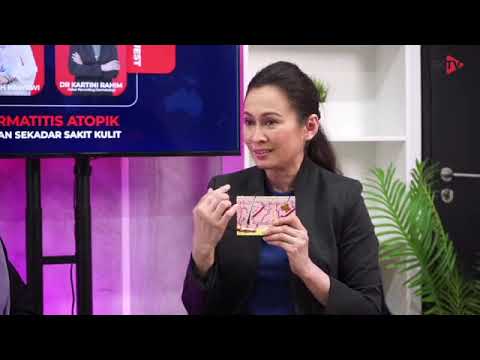
Dr Kartini Farah Rahim is a Consultant Dermatologist in Shah Alam with a clinical focus on eczema, psoriasis and other inflammatory skin conditions, as well as the care of women and children. She is Media Advisor to the Malaysia Eczema Support Community (MESC) on Facebook. She practises at Avisena Specialist Hospital and Avisena Women’s & Children’s Specialist Hospital, and consults in English and Bahasa Malaysia.
A consultation involves a detailed history, a full skin examination including the scalp and nails, tests such as skin scrapings or a biopsy where needed, a clear explanation of the diagnosis and a treatment plan agreed with you, with follow-up to track progress. Read about Dr Kartini, see the FAQ, or book an appointment.