Rashes, dry patches and marks on the skin are a normal part of growing up, and most are harmless. Some, however, cause itch, poor sleep and worry for the whole family, or need early treatment. This page covers common skin conditions in babies and children, and when to seek help.
Why does children’s skin need a different approach?
Children are not simply small adults when it comes to skin:
- A baby’s skin barrier is still maturing, so it loses water easily and reacts more readily to irritants.
- Children have a large skin surface compared with their body weight, so they absorb more of any cream applied.
- The strength of a treatment, how much is used and for how long all need adjusting for age and body site.
- Young children cannot describe their symptoms, and itch often shows up as irritability, rubbing and broken sleep.
For these reasons, adult creams and products bought for other family members should not be used on children’s skin unless a doctor has advised otherwise.
What does atopic eczema look like in babies and children?
Atopic eczema causes dry, itchy, inflamed skin. The NHS notes that it usually starts in babies and young children and tends to improve as they get older, although there is currently no cure.
The pattern often changes with age:
- Babies: cheeks, forehead, scalp and the outer arms and legs.
- Toddlers and school-age children: elbow and knee creases, wrists, ankles and neck.
- Teenagers: face, neck and hands, as well as skin creases.
Common triggers listed by the NHS include soap, detergents, some fabrics, heat, dust mites and skin infections.
Treatment focuses on:
- generous, frequent use of emollients, even when skin looks clear
- topical corticosteroids of the right strength, used as directed during flares
- non-steroid anti-inflammatory creams for sensitive areas
- wet wrap therapy for stubborn flares
- treating infection when it occurs
- specialist treatments, including phototherapy or systemic medicines, for severe eczema in selected children
Dr Kartini has recorded videos on wet wrap therapy and on eczema in children, available on the videos page. For a full guide, see eczema.
Warning sign: if eczema suddenly becomes painful, with clusters of small punched-out sores or blisters and fever, seek same-day medical care, as this can be a herpes virus infection of eczema skin.
What causes nappy rash (ruam lampin) and how is it treated?
According to DermNet, most nappy rash is irritant dermatitis. Urine and a closed nappy make the skin soggy, and enzymes in stools break down its protective oils.
A useful clue is where the rash sits:
- Irritant nappy rash usually spares the skin folds.
- Candida (yeast) infection tends to involve the folds, with small satellite spots or pustules at the edges.
To prevent and treat nappy rash:
- change nappies often and allow some nappy-free time
- clean gently with water and a soft cloth
- apply a barrier ointment at each change
- use an antifungal cream if candida is diagnosed
- use a mild steroid cream only if advised, and only for a short time
Wet wipes containing fragrance or preservatives can occasionally cause contact allergy. See a doctor if the rash is not improving, or has blisters, pus, bleeding or fever.
What is cradle cap?
Cradle cap causes greasy, yellowish, scaly patches on a baby’s scalp, and sometimes on the face, eyebrows or nappy area. The NHS describes it as harmless and notes that it usually clears within a few months.
NHS advice includes:
- softening scales with an emollient, then gently brushing and washing with baby shampoo
- avoiding olive oil and peanut oil, soap and adult shampoos
- not picking crusts, which can lead to infection
See a doctor if cradle cap spreads widely, bleeds or leaks fluid, or the skin looks swollen or very itchy, as this may point to eczema or infection.
Which birthmarks need a doctor’s review?
| Birthmark | What it looks like | Usual course |
|---|---|---|
| Salmon patch (stork mark) | Flat pink or red patch on the eyelids, forehead or back of the neck | Often fades by around age 2 |
| Infantile haemangioma (strawberry mark) | Raised red lump appearing soon after birth | Grows for 6 to 12 months, then usually shrinks and fades by about age 7 |
| Port wine stain | Flat red or purple mark present at birth, often on the face | Persists and may darken over time |
| Mongolian blue spot | Blue-grey patch like a bruise, usually on the lower back or buttocks | Common in babies with darker skin; usually fades during childhood |
| Café-au-lait spots | Flat light-brown patches | Persist; six or more should be checked |
| Congenital mole | Brown or black mole present at birth | Persists; larger moles need monitoring |
The NHS advises seeing a doctor about a birthmark near the eyes, nose or mouth, one that grows, darkens or becomes lumpy, six or more café-au-lait spots, or a large congenital mole. Haemangiomas that could affect vision, breathing or feeding, or that break down, benefit from early assessment because treatment, including oral beta-blocker medicine, is most effective when started during the growth phase.
What are common viral rashes and molluscum in children?
Many childhood viral infections cause a widespread rash with fever that settles on its own.
Hand, foot and mouth disease (penyakit tangan, kaki dan mulut) causes fever, mouth ulcers and spots or blisters on the hands and feet. The NHS notes that it usually gets better within 7 to 10 days and spreads through coughs, sneezes, stools and blister fluid. Keep children hydrated and follow the advice of your doctor and your child’s school or nursery during outbreaks.
Chickenpox (cacar air) causes itchy blisters that crust over. Seek medical advice if spots become painful and red, if the child has breathing difficulty, or if eyes are affected.
Molluscum contagiosum causes small, pearly bumps with a central dimple. DermNet notes that it mainly affects children under 10, is more common in warm climates, and may spread more easily when children bathe or swim together. About half of cases clear by 12 months and two-thirds by 18 months, and in many cases no treatment is needed. Children with eczema tend to have more spots for longer.
Emergency: a rash that does not fade when a glass is pressed firmly against it, together with fever or a very unwell child, needs emergency care.
What should parents in Malaysia know about children’s skin?
- Heat and sweat: prickly heat (biang peluh) is common in hot weather. Light cotton clothing, good ventilation and avoiding over-wrapping help. Sweat also aggravates eczema.
- Air-conditioning: cool, dry indoor air can dry the skin, so continue moisturising.
- Taska, tadika and schools: hand, foot and mouth disease, impetigo, scabies and molluscum spread easily in close settings. Teach children not to share towels.
- Traditional remedies and unregulated creams: home remedies are often used with good intentions, but some can irritate sensitive or broken skin. Unregistered creams may contain undeclared steroids, which are a particular concern in children.
- Sun protection: shade, hats and protective clothing are the first line of protection for babies and young children.
- Emotional wellbeing: visible eczema or birthmarks can lead to teasing. Talk to teachers, and let your doctor know if your child’s confidence or sleep is affected. Support communities for families living with eczema exist in Malaysia.
Seeing Dr Kartini for your child’s skin
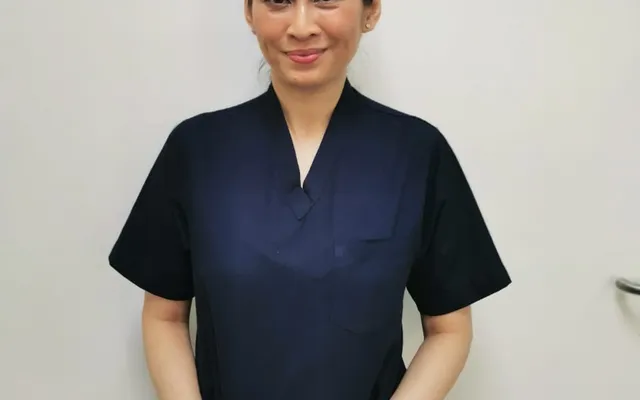
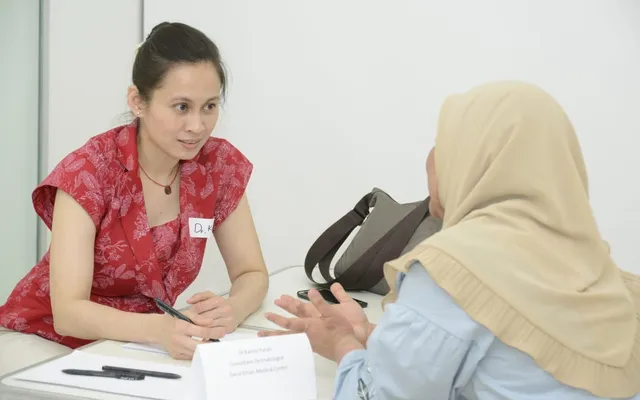
Dr Kartini Farah Rahim is a Consultant Dermatologist who practises at Avisena Women’s & Children’s Specialist Hospital and Avisena Specialist Hospital in Shah Alam, and is known for her care of women and children.
A consultation for a child typically includes:
- History: from parents and, where old enough, the child, including when the problem began, family history of eczema, asthma or hay fever, skincare products, feeding and sleep. Bring any creams you have tried.
- Examination: carried out gently, with the child as comfortable as possible.
- Tests only when helpful: a skin swab for suspected infection, skin scrapings for fungal infection or scabies, or rarely a skin biopsy.
- A management plan: explained in English or Bahasa Malaysia, with practical guidance on how much cream to use and how to do techniques such as wet wraps.
- Follow-up: to adjust treatment as the child grows, working alongside your family doctor or paediatrician where needed.
To arrange a visit, see appointments.