Ichthyosis is a lifelong condition for most people who have it, and caring for the skin can take time and effort every day. With accurate diagnosis, practical routines and good support, many people with ichthyosis manage their skin well and live full lives at school, at work and at home.
What is ichthyosis?
Ichthyosis is a group of conditions in which the skin does not shed and renew itself in the usual way. Skin cells either build up too quickly or are not shed normally, so they accumulate as visible scale. DermNet describes it as a disorder of cornification that causes persistently dry, thickened, scaly skin.
Key points:
- There are more than 20 types, according to DermNet and the NHS.
- Most types are inherited, caused by changes in genes that affect the skin barrier.
- Acquired ichthyosis develops in adulthood and can be linked to other illnesses or medicines.
- Ichthyosis is not contagious and is not caused by poor hygiene or anything parents did during pregnancy.
The name comes from the Greek word for fish, but many families prefer to describe the skin simply as dry and scaly. In Malay, people often use kulit bersisik.
What are the main types of ichthyosis?
| Type | When it appears | Key features | Inheritance |
|---|---|---|---|
| Ichthyosis vulgaris | Early childhood | Fine white or grey scale, especially on the shins; about 95% of all cases | Autosomal dominant |
| Recessive X-linked ichthyosis | Infancy | Larger, darker scales on the trunk and limbs; mainly affects boys | X-linked |
| Autosomal recessive congenital ichthyosis, including lamellar ichthyosis | At birth, often as a collodion baby | Large plate-like scale, or red skin with fine scale | Autosomal recessive |
| Harlequin ichthyosis | At birth | Very thick, plate-like scale with deep cracks; needs intensive newborn care | Autosomal recessive |
| Epidermolytic ichthyosis | At birth | Red, blistering skin in infancy, later thickened scale | Usually autosomal dominant |
| Acquired ichthyosis | Adulthood | Dry, scaly skin linked to another illness or a medicine | Not inherited |
DermNet estimates the incidence of ichthyosis vulgaris at between 1 in 250 and 1 in 1,000 people, and recessive X-linked ichthyosis at between 1 in 2,000 and 1 in 6,000.
What is a collodion baby?
Some babies with congenital ichthyosis are born covered in a tight, shiny membrane, like cling film. This membrane cracks and sheds over the first weeks of life. These babies need care in a neonatal unit to manage body temperature, fluids and infection risk. DermNet notes that about 10% of collodion babies have self-healing skin afterwards. For other skin problems in babies and young children, see children’s skin conditions.
What are the symptoms and complications of ichthyosis?
Symptoms depend on the type and severity. They can include:
- dry, rough skin with fine or thick scale
- thickened, lined skin on the palms and soles
- itching
- painful cracks (fissures) that can become infected
- tight skin that limits movement, especially around joints
- reduced sweating, which can cause overheating
- eyelids pulled outwards, causing dry, sore eyes
- scale building up in the ears, affecting hearing
- hair thinning in some types
Ichthyosis vulgaris often occurs alongside atopic eczema, and the two can be mistaken for each other.
Can ichthyosis start in adulthood?
Yes. Dry, scaly skin that appears for the first time in adult life, without a family history, may be acquired ichthyosis. DermNet lists possible associations including thyroid disease, sarcoidosis, HIV infection, Hodgkin lymphoma and other cancers, as well as some medicines.
This does not mean that every adult with dry skin has a serious illness. Dry skin is very common, especially with air-conditioning, frequent washing and ageing. However, new, persistent and widespread scaling that does not respond to regular moisturising deserves a medical review, so that any underlying cause can be looked for and treated.
How is ichthyosis diagnosed?
Most types are diagnosed by examining the skin and asking about when symptoms began and whether relatives are affected. Further tests may include:
- a skin biopsy, in selected cases
- genetic testing, where available, to confirm the type and help families understand the chance of it affecting future children
- blood tests, for example when acquired ichthyosis is suspected or before certain treatments
How is ichthyosis treated?
The US National Institute of Arthritis and Musculoskeletal and Skin Diseases (NIAMS) notes that there is currently no cure for ichthyosis, but treatments are available to manage symptoms, and most people need lifelong care. Treatment usually combines:
- Bathing and soaking to soften scale, followed by gentle removal with a soft cloth or pumice, using non-soap cleansers.
- Emollients applied generously to damp skin, several times a day. Dr Kartini’s Bahasa Malaysia videos on skin moisture are available on the videos page.
- Keratolytic moisturisers, which help loosen scale. Common ingredients include urea, lactic acid and salicylic acid. Some sting cracked skin, and salicylic acid should not be used over large areas in babies and young children because it can be absorbed through the skin.
- Oral retinoids for severe types, with regular monitoring. Retinoids must not be taken during pregnancy.
- Antibiotics for infected cracks.
- Eye and ear care, physiotherapy for tight skin, and vitamin D supplements in some severe cases.
- Treating the underlying cause in acquired ichthyosis.
Fire safety: the NHS advises keeping paraffin-based emollients away from open flames and not smoking while using them. Clothing, bedding and dressings that have absorbed emollient can catch fire more easily, so wash them regularly.
How can people with ichthyosis cope with Malaysia’s heat?
Reduced sweating is one of the most important practical issues in a tropical country. Hot weather all year round, outdoor school activities and long journeys can all increase the risk of overheating.
Practical steps include:
- plan outdoor activities for cooler times of day
- use shade, fans, air-conditioning and cool water sprays or damp cloths
- wear light, loose clothing
- drink fluids regularly
- give teachers and sports coaches written information about the risk
- learn the warning signs of overheating: headache, dizziness, tiredness, flushed skin and confusion
Some people find humid weather eases dryness, while long hours in air-conditioning can dry the skin further, so routines may need adjusting.
How does ichthyosis affect daily life and emotional wellbeing?
Living with a visible skin condition can be emotionally demanding. People with ichthyosis may face staring, questions or unkind comments. Shedding scale, time-consuming skincare, and discomfort from cracks can affect school, work, sleep and relationships.
Parents often carry a heavy load of daily care and may feel worry or guilt, even though inherited ichthyosis is nobody’s fault. In some communities, ichthyosis is wrongly thought to be contagious or a result of poor care, which adds to stigma.
Helpful steps include:
- explaining the condition to schools, and asking for practical adjustments
- talking to your doctor about mood, sleep and confidence
- seeking psychological support when needed
- connecting with other families
In Malaysia, an ichthyosis support group brings patients and families together. Dr Kartini Farah Rahim serves as the group’s main medical advisor, and Malaysian print media have covered her work with ichthyosis patients.
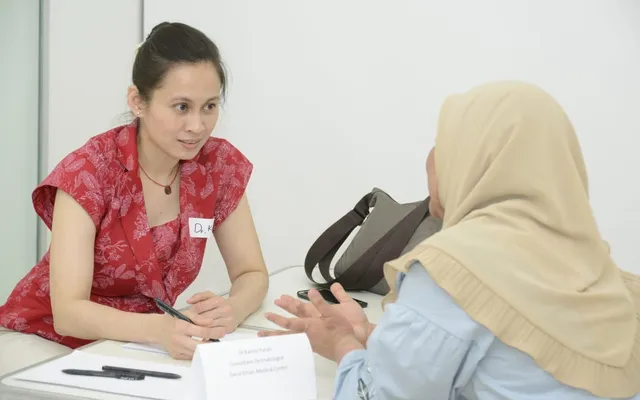
Seeing Dr Kartini for ichthyosis
Dr Kartini Farah Rahim is a Consultant Dermatologist who practises at Avisena Specialist Hospital and Avisena Women’s & Children’s Specialist Hospital in Shah Alam.
A consultation typically includes:
- History: when symptoms began, any collodion membrane at birth, family history, problems with heat or sweating, eye or hearing symptoms, current skincare routine, and effects on school, work and wellbeing.
- Examination: of the whole skin, including the palms, soles, scalp, eyes and ears.
- Tests where appropriate: a skin swab for suspected infection, a skin biopsy or referral for genetic testing when it would clarify the type, and blood tests when needed for monitoring.
- A management plan: a realistic bathing and moisturising routine, age-appropriate treatments, a plan for hot weather, and referrals to eye, ear, physiotherapy or genetics services where relevant.
- Follow-up: regular reviews, especially for children as their skin and needs change.
Consultations are available in English and Bahasa Malaysia. To arrange a visit, see appointments.