The right dermatologist for your skin condition is one whose everyday work matches your problem. Long-term inflammatory diseases such as eczema, psoriasis, hidradenitis suppurativa and blistering disorders are managed in medical dermatology, which focuses on diagnosis, prescription treatment and follow-up over months or years. Suspicious lumps may also need procedural skills, and appearance-related concerns fall under cosmetic dermatology. Once you know what kind of care you need, a little preparation turns your first appointment into a far more useful one.
If you want to know how to verify a dermatologist’s registration and training, read How to Choose a Dermatologist in Malaysia. This guide is about matching your condition to the right care and making the most of the visit.
What are the different types of dermatology care?
Dermatology is a broad specialty, and the balance of work varies between dermatologists.
- Medical dermatology is the diagnosis and treatment of diseases of the skin, hair and nails: eczema, psoriasis, acne, infections, allergic reactions, autoimmune and blistering conditions. Care is often long term and may include prescription creams, tablets, light therapy or injectable medicines.
- Surgical or procedural dermatology covers skin biopsies, removal of skin lumps and skin cancers, and procedures such as injections into inflamed lesions.
- Cosmetic dermatology focuses on appearance, such as pigmentation, ageing skin and some types of scarring.
- Paediatric dermatology is the care of babies, children and teenagers, where diagnosis, treatment choices and communication with families differ from adult care.
So which dermatologist should you see? If your skin is inflamed, itchy, painful, blistering, infected or keeps coming back, start with a dermatologist who has a medical and chronic disease focus. Cosmetic treatment can come later, once the underlying condition is under control.
Which skin problems need a dermatologist with a medical focus?
Eczema
Mild eczema can often be managed by a GP. The Malaysian atopic eczema guideline, summarised for primary care, lists reasons for non-urgent referral to a dermatologist. These include diagnostic uncertainty, severe or uncontrolled eczema, parental concern, the need for treatment demonstration or education, eczema in sites that are difficult to treat, and psychological impact on the patient or family. Read more about eczema.
Psoriasis
The Malaysian psoriasis guideline summary recommends dermatology referral when the diagnosis is uncertain, when an adequate trial of topical treatment for 6 to 12 weeks has not worked, or when moderate to severe psoriasis needs phototherapy, systemic or biologic treatment. Widespread redness of the skin (erythrodermic psoriasis) or generalised pustular psoriasis should be referred urgently. Read more about psoriasis.
Acne with scarring
Painful nodules and cysts, or acne that leaves dark marks or scars, need medical treatment early. Scars are far easier to prevent than to treat. Read more about acne.
Hidradenitis suppurativa
Recurrent painful lumps in the armpits, groin, buttocks or under the breasts are often mistaken for boils. The American Academy of Dermatology has highlighted that some people with hidradenitis suppurativa (HS) wait 7 to 10 years for a diagnosis. Recognising it earlier opens up more treatment options. Read more about hidradenitis suppurativa.
Blistering disorders
Unexplained blisters, or raw areas on the skin or inside the mouth, need specialist assessment. Diagnosis often depends on a skin biopsy, sometimes with special immunofluorescence testing. Read more about blistering disorders.
Drug reactions
Any new rash after starting a medicine should be checked. A rash with blistering, peeling skin, fever, or sores in the mouth, eyes or genitals is an emergency, so go straight to the nearest emergency department.
Skin infections that keep coming back
Recurrent boils, fungal rashes that return after treatment, or repeated impetigo can point to an underlying skin condition or to creams being used in the wrong way. Read more about skin infections.
Children’s skin
Babies and children with eczema, birthmarks, rashes that do not settle, or inherited conditions such as ichthyosis benefit from a dermatologist who regularly treats children. See children’s skin conditions.
Your concern, the type of care and what to bring
| Your concern | Type of dermatology care | What to bring |
|---|---|---|
| Itchy, dry rash that keeps returning (possible eczema) | Medical dermatology | Photos of flares, moisturisers and creams used, known triggers, family history of eczema, asthma or hay fever |
| Thick scaly patches, scalp or nail changes (possible psoriasis) | Medical dermatology | Photos, previous treatments and how long each was used, any joint pain or morning stiffness, current medicines |
| Painful acne, cysts or scarring | Medical dermatology, with procedures for scars later | Skincare and acne products used, previous acne medicines and duration, menstrual pattern, pregnancy plans |
| Painful lumps in armpits, groin or under breasts that drain | Medical dermatology, sometimes with surgical input | Photos, a timeline of flares, antibiotic courses taken, dressings used, smoking status |
| Blisters or raw areas on skin or in the mouth | Medical dermatology, often hospital-based | Photos, list of recently started medicines, eye or mouth symptoms |
| Rash after starting a new medicine | Urgent medical assessment | Names of all medicines and the dates they were started |
| Boils or fungal rashes that keep coming back | Medical dermatology | Swab or scraping results, creams and courses tried, whether family members are affected |
| Rash, birthmark or eczema in a child | Medical dermatology with experience in children | The child’s skincare products, photos of flares, feeding or allergy history |
| New or changing mole or lump | Medical or procedural dermatology | Photos over time, the date you first noticed it, family history of skin cancer |
| Pigmentation or ageing skin | Cosmetic dermatology | Products used, sun protection habits, any previous procedures |
Do I need a GP referral to see a dermatologist?
Not always, but a referral often helps. A GP letter summarises your history, previous treatments and test results, which saves time and can avoid repeated investigations. Whether a letter is required depends on the hospital, your insurer or your employer’s panel arrangements, so check before booking.
A referral is particularly useful if you have already had tests, have other medical conditions, take several medicines, or your GP has specific questions for the dermatologist.
How should I prepare for my first dermatologist appointment?
Skin changes from day to day. The rash that kept you awake last week may look calm on the day of your appointment. Good preparation fills that gap.
- Photos of flares. Take clear photos in daylight when your skin is at its worst: one close-up and one wider shot that shows the location. Note the date.
- A list of everything you have tried. Include prescription creams and tablets, pharmacy products, moisturisers, cleansers, traditional or herbal remedies and creams bought online. Photograph the labels or bring the products, and note how long you used each one and whether it helped.
- A simple timeline. When did it start? Does it come and go? Did it follow a new medicine, job, illness, pregnancy, house move or product?
- Possible triggers. Heat and sweating, stress, fabrics, detergents, foods, pets or exposures at work.
- Family history. Eczema, asthma, hay fever, psoriasis, joint problems or autoimmune conditions in close relatives.
- Other health information. Current medicines and supplements, allergies, previous results or biopsy reports, and whether you are pregnant, breastfeeding or planning a pregnancy.
- Your questions. The American Academy of Dermatology suggests writing questions down beforehand, along with your medicines, vitamins and supplements, and bringing copies of previous results.
On the day, the AAD advises avoiding make-up, nail polish and heavy moisturiser, so the dermatologist can see your bare skin and nails. Wear clothing that is easy to remove. If you suspect a product is causing a reaction, bring it with you.
What happens at a dermatology consultation?
A typical first consultation includes:
- History. Questions about your symptoms, timeline, treatments, triggers, general health, and the effect on sleep, work, school and mood.
- Examination. The dermatologist will often look beyond the area of concern, including the scalp, nails and mouth, because the pattern of a rash often points to the diagnosis. A handheld magnifier with a light, called a dermatoscope, may be used.
- Tests, if needed. These might include:
- skin scrapings or nail clippings to look for fungal infection;
- swabs for bacterial or viral infection;
- blood tests;
- a skin biopsy, a small sample of skin taken under local anaesthetic. DermNet notes that results usually take one to two weeks, sometimes longer if special stains are needed;
- patch testing for suspected contact allergy. The British Association of Dermatologists describes this as three visits over a week, with test substances applied to the back and reactions recorded at 48 hours.
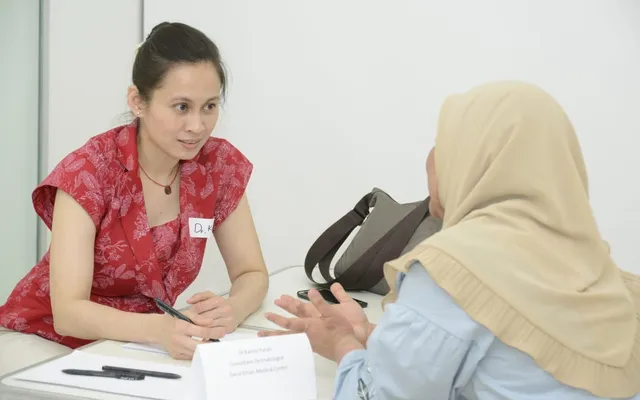
- Explanation and plan. You should leave knowing the likely diagnosis, how to use each treatment, the possible side effects and when to return.
What should I expect if my skin condition is chronic?
Many common skin diseases, including eczema and psoriasis, are long term. The realistic aim is good control: fewer and milder flares, comfortable skin, better sleep and a normal daily life.
- Improvement takes time. The Malaysian psoriasis guideline summary suggests reviewing a new topical treatment after about six weeks to check tolerability and response.
- Maintenance matters. In the Malaysian atopic eczema guideline summary, emollients are described as the mainstay of management at every stage, from mild to severe.
- Flares still happen. A good plan includes what to do when they occur.
- Treatment can be stepped up or down. Phototherapy, systemic or biologic treatments are considered when creams alone are not enough.
How does follow-up and shared decision making work?
The Malaysian psoriasis guideline summary describes treatment as a combined decision between patients and their healthcare professionals, based on good information, the patient’s preferences, disease severity and the risks and benefits of each option. The same principle applies across dermatology.
In practice, shared decision making means:
- your dermatologist explains the options, including benefits, side effects and practical demands such as clinic visits or blood tests;
- you explain what matters to you, such as pregnancy plans, work, school, travel or worries about side effects;
- you agree a plan together and review it at follow-up;
- you bring photos and notes to each visit, so decisions reflect how your skin has really been.
I often remind patients that it is perfectly acceptable to say a treatment is not working, or is difficult to fit into daily life. That information is exactly what helps adjust the plan.
Seeing Dr Kartini
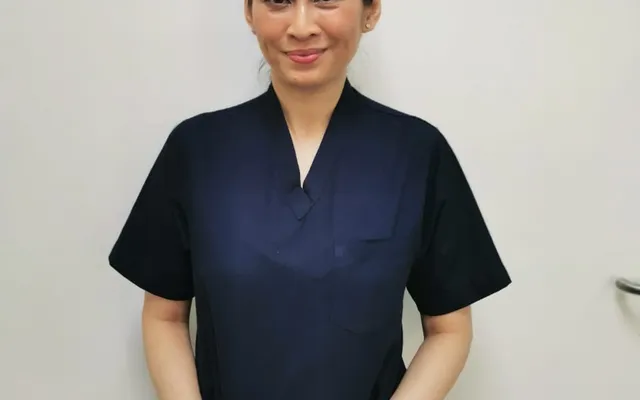
Dr Kartini Farah Rahim is a Consultant Dermatologist in Shah Alam whose clinical focus includes eczema, psoriasis, acne, skin infections, allergic skin reactions and blistering disorders, as well as the care of women and children. She practises at Avisena Specialist Hospital and Avisena Women’s & Children’s Specialist Hospital, and consults in English and Bahasa Malaysia. She is Media Advisor to the Malaysia Eczema Support Community (MESC) on Facebook and main medical advisor for the Hidradenitis Suppurativa Support Group Malaysia and an ichthyosis support group.
At a first appointment, she takes a full history, examines your skin, explains the likely diagnosis, discusses any tests and treatment options with you, and agrees a follow-up plan. Bring your photos, product list and timeline. You can read about Dr Kartini, view her credentials, browse dermatology conditions or book an appointment.